Microfiber Cloth vs Microfiber Mops: Which Cleans Better?
The Battle of Modern Cleaning: Comparing Microfiber Cloths vs. Microfiber Mops
Maintaining a spotless and inviting environment, whether at home, in the workplace, or at a retail establishment, is crucial to comfort, hygiene, and overall wellbeing. As technological advancements reach even the most routine tasks, cleaning tools have evolved significantly. At the heart of this evolution are two powerhouses: the Microfiber Cloth and Microfiber Mops. Both tools harness the cleaning capabilities of microfibers, offering superior results over traditional cotton and synthetic alternatives. But which one is right for your unique cleaning requirements?
In this comprehensive comparison, we’ll explore the properties, performance, applications, maintenance, advantages, and considerations for both microfiber cloths and microfiber mops. By the end, you’ll be equipped to make an informed decision for your cleaning routine, whether you’re a homeowner, facility manager, or professional cleaner.
Table of Contents
- Understanding Microfiber Cleaning Technology
- Microfiber Cloth: Features, Applications, and Benefits
- Microfiber Mops: Features, Applications, and Benefits
- Microfiber Cloth vs. Microfiber Mops: Side-by-Side Comparison
- Choosing the Right Tool for Your Needs
- Care and Maintenance Best Practices
- Sustainability and Environmental Impact
- Cost Analysis: Microfiber Cloth vs. Microfiber Mops
- Conclusion: Making the Most of Microfiber Cleaning
Understanding Microfiber Cleaning Technology
Modern microfiber cleaning tools rely on innovative textile engineering. A microfiber is a synthetic fiber finer than one denier or decitex/thread—less than one-sixteenth the thickness of a human hair. Usually made from polyester, polyamide (nylon), or a blend of both, these ultrafine fibers are split during manufacture, creating many more fibers—vastly increasing surface area and absorption capacity.
The unique structure allows microfiber materials to:
- Trap dust, microbes, and dirt particles: The microscopic split fibers grasp onto dirt, pulling it away from surfaces, unlike traditional fibers that merely push particles around.
- Absorb liquids efficiently: Microfiber can hold up to seven times its weight in water, making it effective for spills and wiping.
- Clean with—or without—chemicals: In many cases, microfiber can clean effectively with just water, reducing the need for harsh cleaners.
Given these advantages, microfiber has transformed the cleaning industry, with Microfiber Cloth and Microfiber Mops leading the charge. Let’s explore each tool’s specific strengths.
Microfiber Cloth: Features, Applications, and Benefits
Key Features of Microfiber Cloth
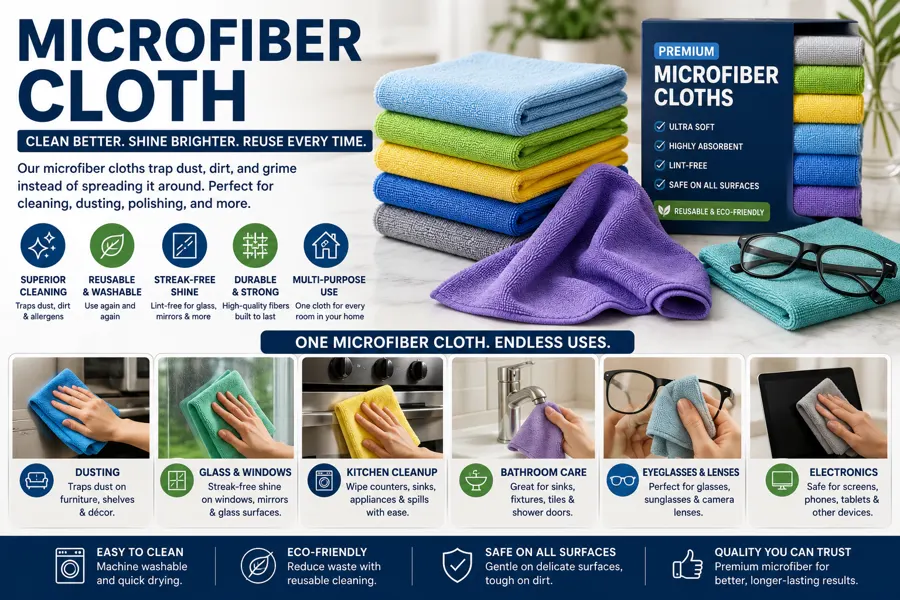
A Microfiber Cloth is a simple yet versatile cleaning companion. Available in various sizes, thicknesses, and weaves, these cloths are engineered for efficiency, durability, and safety. Some of the primary features include:
- Soft, non-abrasive surface: Safe for use on sensitive items like glasses, electronics, and polished surfaces.
- High absorbency: Ideal for wiping spills, drying surfaces, and soaking up moisture.
- Electrostatic properties: Attracts and binds dust, pet hair, pollen, and lint.
- Variety of weaves: From plush for buffing to waffle for scrubbing, and suede for delicate dusting.
- Reusable and durable: Withstand multiple wash cycles without degrading or losing effectiveness.
Typical Applications
- Dusting and cleaning electronics, such as TV screens, computer monitors, and smartphones.
- Polishing glassware, mirrors, and stainless steel—for a streak-free and lint-free finish.
- General-purpose cleaning in kitchens and bathrooms—for countertops, tiles, fixtures, and appliances.
- Detailing cars, motorcycles, and bicycles—both interior and exterior parts.
- Maintaining delicate collectibles or jewelry.
Benefits of Microfiber Cloth
- Versatility: Suitable for almost any cleaning task, from heavy-duty grime to gentle polishing.
- Efficiency: Removes more dirt and bacteria than traditional wipes or dusters, often without the need for chemical cleaners.
- Cost-effective: Reduces the need for disposable paper towels and cleaning products.
- Eco-friendly potential: Minimizes chemical usage and can be reused multiple times.
- Portable and compact: Easy to stash in pockets, bags, or glove compartments for on-the-go cleaning.
Microfiber Cloths are indispensable for quick responses to messes, precision cleaning, and maintaining surfaces where cleanliness and appearance matter most.
Microfiber Mops: Features, Applications, and Benefits
Key Features of Microfiber Mops
Microfiber Mops are specifically designed to tackle large surfaces, providing ergonomic and time-saving solutions for floor cleaning. Essential features typically include:
- Wide mop heads: Designed to cover more area quickly.
- Removable and washable pads: Eco-friendly and offer long-term cost savings.
- Adjustable, ergonomic handles: Reduce strain and improve maneuverability, reaching under furniture and into tight spaces.
- Dual-functionality: Compatible with both wet mopping (deep cleaning, sanitizing) and dry mopping (dusting, debris collection).
- Strong cleaning action: Scrapes away sticky or stubborn soil with less need for hard scrubbing.
Typical Applications
- Daily cleaning and maintenance of hard flooring—tile, hardwood, laminate, vinyl, and concrete.
- Deep-cleaning spills, muddy footprints, and pet stains.
- Dust mopping for allergen reduction in homes, gyms, schools, and offices.
- Commercial cleaning operations for speed and effectiveness over large floor spaces.
- Wet disinfecting in hospitals, clinics, kitchens, and other sensitive environments.
Benefits of Microfiber Mops
- Improved hygiene: Effectively lifts and locks away bacteria, allergens, and fine dust.
- Time-saving: Covers more ground per swipe, requiring fewer passes to achieve spotless results.
- Water and chemical reduction: Cleans efficiently even with minimal liquid, reducing water and cleaner consumption.
- Less physical effort: Glide smoothly, reducing user fatigue and risk of repetitive strain.
- Reusable system: High-quality mop heads withstand multiple washes, leading to long-lasting use.
Professional cleaners and busy households alike rely on Microfiber Mops as the foundation for effective, sustainable floor care.
Microfiber Cloth vs. Microfiber Mops: Side-by-Side Comparison
| Criteria | Microfiber Cloth | Microfiber Mops |
|---|---|---|
| Primary Use | Surface detailing, spot cleaning, dusting, polishing small areas | Large area floor cleaning, wet or dry mopping |
| Surface Compatibility | Glass, electronics, appliances, small fixtures | Hard flooring (tile, wood, laminate, vinyl), broad flat surfaces |
| Versatility | Extremely versatile, usable for multiple tasks | Focused on floors but adaptable to walls and ceilings with special attachments |
| Cleaning Power | Excellent for surface dirt, fine dust, and smudges | Exceptional for deep floor cleaning, sticky residue, and removing microbes |
| Hygiene/Allergen Control | Very good for localized allergen control | Excellent for large-scale allergen and microbe removal |
| Efficiency (Time and Labor) | Best for spot cleaning and small areas; may be labor-intensive for large spaces | Optimal for speedy coverage of large areas; less physical exertion required |
| Reusable Lifespan | With proper care—hundreds of washes | Washable mop pads offer long lifespan, slightly more wear from abrasion |
| Cost Savings | High savings on paper towels and disposable wipes | Reduced mop head replacement costs over disposable mops |
| Environmental Impact | Reduces disposables; low chemical use | Minimizes water and chemical waste for large surface areas |
In Summary:
- Choose a Microfiber Cloth for precision, versatility, and detailed cleaning.
- Choose Microfiber Mops for speed, ergonomic floor cleaning, and large area effectiveness.
Choosing the Right Tool for Your Needs
When selecting between microfiber cloths and microfiber mops, begin by assessing your primary cleaning challenges:
- For Floors Only: Microfiber Mops will massively reduce cleaning time and improve results—especially in high-traffic areas, open-plan homes, or commercial settings.
- Multipurpose Cleaning: A set of quality microfiber cloths can tackle virtually any job, from appliance polishing to bathroom cleanup, making them ideal for varied homes and small businesses.
- Allergen Management: For households with allergy sufferers, both tools are valuable—cloths for surfaces and mops for floors, helping to reduce allergen load holistically.
- Professional and High-Volume Use: Facilities, offices, and cleaning services may benefit from using both tools—cloths for detail work and mops for floors and large expanses.
In many cases, a combination of both solutions creates the most efficient and hygienic cleaning system.
Care and Maintenance Best Practices
To maximize the lifespan and performance of your microfiber cleaning tools, follow these best practices:
Laundering
- Wash microfiber with similar materials (microfiber only) to prevent lint transfer.
- Avoid fabric softeners and bleach, which can coat and break down the split fibers, reducing absorbency and cleaning power.
- Use a mild detergent and wash at medium temperatures.
- Air drying is preferred, though low-heat tumble drying is acceptable.
Storage
- Keep microfiber cloths and mop pads dry and stored in a clean environment.
- For mops, ensure the handle and mop head are fully dry before storage to prevent mildew.
Regular Inspection
- Check for signs of wear: thinning, tearing, or reduced absorbency indicate it’s time for replacement.
- Rotate cloths and mop pads to extend overall product lifespan.
Proper care ensures both Microfiber Cloth and Microfiber Mops remain hygienic, effective, and economical.
Sustainability and Environmental Impact
Modern consumers and businesses are increasingly concerned about the environmental impact of their cleaning choices. Microfiber technology offers several sustainability advantages:
- Reduced Chemical Use: The ability to clean with just water cuts down on harsh cleaners entering water supplies.
- Reusable: Both cloths and mop pads can be washed—and reused—hundreds of times, reducing landfill contributions from disposable wipes, paper towels, and mop heads.
- Energy and Water Efficiency: Microfiber’s superior absorbency means less water is required for rinsing and mopping.
That said, there are environmental considerations around the synthetic composition of microfiber. Responsible laundering, using a laundry bag designed to trap microplastics, can help minimize fibers entering the water system. Overall, the lifecycle analysis often demonstrates microfiber’s reduced environmental impact compared to disposable cleaning products and more water- and chemical-intensive alternatives.
Cost Analysis: Microfiber Cloth vs. Microfiber Mops
Upfront, high-quality microfiber cleaning tools tend to cost more than their disposable or traditional cotton counterparts. However, the long-term savings can be substantial:
Microfiber Cloth
- Initial investment: Moderate; larger packs offer better value per cloth.
- Ongoing costs: Minimal if maintained properly, with replacements only needed after extensive use.
- Paper towel/wipe savings: A single set can easily replace hundreds of rolls of paper towels or packs of wipes.
Microfiber Mops
- Initial investment: Higher; includes mop handle/mechanism and multiple pads.
- Ongoing costs: Negligible; mop pads are washable and durable.
- Disposable mop/replacement costs: Significant savings over time, especially for commercial or daily users.
Factoring in both durability and cleaning effectiveness, both products frequently pay for themselves within months, contributing to both budget-friendliness and sustainability.
Conclusion: Making the Most of Microfiber Cleaning
The debate between Microfiber Cloth and Microfiber Mops is less about which tool is “better,” and more about which is best for a specific task. Microfiber Cloths offer unmatched flexibility, gentle yet deep cleaning, and value for multitaskers. Microfiber Mops deliver speed, ergonomic comfort, and hygiene over sprawling surfaces, transforming floor care for homes and businesses alike.
Ultimately, the secret to a consistently clean, inviting, and healthy environment lies in pairing the right tools to your unique routine. By investing in quality microfiber solutions and practicing proper maintenance, you can support wellbeing, embrace eco-conscious cleaning, and maximize value in the long run.
Ready to elevate your cleaning experience? Explore our collection of premium Microfiber Cloths and Microfiber Mops in our online store—because every detail matters in creating a space you’re proud to call your own.
Have questions or need personalized recommendations? Contact our expert team today, and discover the smart way to cleaner living.