Carpet Cleaner vs Steam Cleaner vs Wet Dry Vacuum: Which Is Best?
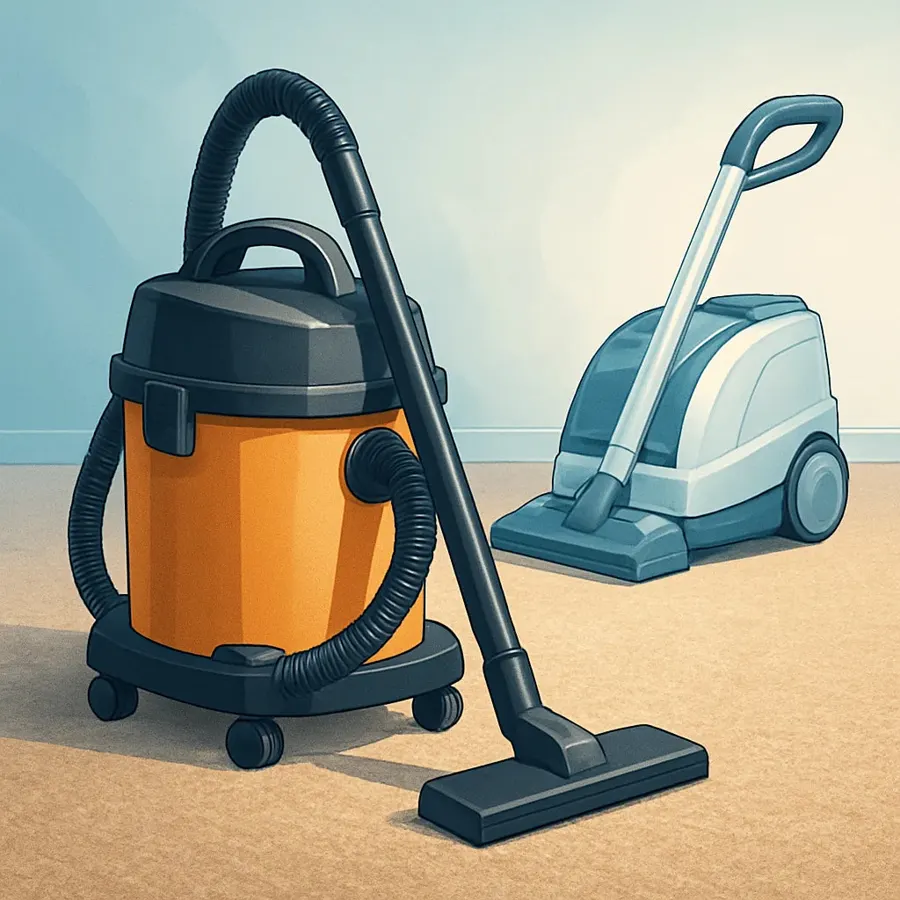
Quick Answer: Choose a carpet cleaner when you need to apply an approved formula and extract soil from compatible carpet, rugs, stairs, or upholstery. Choose a steam cleaner or steam mop for manufacturer-approved sealed hard surfaces and detail jobs where heat and moisture are allowed. Choose a wet dry vacuum for permitted liquid pickup, dry debris, garages, basements, vehicles, and utility cleanup. These machines overlap at the edges, but they do not perform the same core job.
The most useful comparison begins with the mess and surface, not with motor size or a long feature list. A carpet extractor washes soft flooring. A steam tool loosens soil with heated vapor or steam on compatible surfaces. A wet dry vacuum removes allowed liquids and debris but usually does not dispense carpet formula or scrub fibers. This guide explains where each format fits, where it does not, and when owning two tools is more practical than expecting one machine to cover everything.
Carpet Cleaner vs Steam Cleaner vs Wet Dry Vacuum at a Glance
Carpet cleaner
Primary job: Wash and extract from compatible carpet and other approved soft surfaces.
Best fit: Wall-to-wall carpet, traffic lanes, pet accidents, stairs, and approved upholstery.
Main caution: Match the formula to the machine and avoid over-wetting.
Steam cleaner
Primary job: Use heat and moisture on surfaces specifically approved by both the surface maker and tool manual.
Best fit: Compatible sealed tile and other labeled hard surfaces; attachments vary by model.
Main caution: Steam can harm moisture- or heat-sensitive finishes, adhesives, and materials.
Wet dry vacuum
Primary job: Pick up approved liquids and dry debris.
Best fit: Garages, workshops, utility rooms, cars, minor spills, and renovation debris.
Main caution: Change filters or setup as the manual directs before wet pickup.
What a Carpet Cleaner Actually Does
A carpet cleaner—also called a carpet washer or extractor—typically applies water and an approved carpet cleaning solution, agitates the pile with a brush system, and recovers dirty liquid into a separate tank. Full-size upright machines are intended for broader carpeted areas. Portable carpet cleaners trade cleaning-path width for easier spot, stair, vehicle, and upholstery work.
This is the only one of the three categories designed around washing carpet as its central purpose. Before using one, dry-vacuum loose grit and hair with a suitable vacuum cleaner, check the carpet or rug care instructions, and test the method in a discreet area. Some wool, natural-fiber, handmade, antique, color-sensitive, or special-backed rugs should not be wet cleaned at home.
Formula compatibility matters as much as machine format. An upright formula and a portable-machine formula can differ in concentration and foam control. Follow the exact machine manual, bottle label, fill lines, and dilution directions. More detergent is not automatically more effective and can make rinsing or extraction harder.
When a carpet cleaner is the strongest choice
- You have rooms of compatible wall-to-wall carpet that need periodic washing.
- You want a dedicated method for traffic lanes or pet accidents without making guaranteed stain or odor claims.
- You need a hose tool for approved stairs, upholstery, rugs, or vehicle fabric.
- You can plan for preparation, tank cleanup, extraction passes, airflow, and drying time.
When it is the wrong tool
A carpet cleaner is not a general dry vacuum, workshop vacuum, flood-remediation system, or automatic choice for hard floors. It also cannot correct contamination that has reached padding, subfloor, cushion fill, or other hidden layers. A repeated odor or a broad water event may require inspection and professional help rather than repeated surface wetting.
What a Steam Cleaner or Steam Mop Does
“Steam cleaner” covers several designs. A steam mop directs steam through a floor head and pad. A handheld or canister steam tool may include small brushes, nozzles, or fabric accessories. These tools use heat and moisture rather than carpet-cleaning formula, but their approved surfaces vary widely. The exact manual and the material manufacturer have the final word.
A steam mop is primarily a hard-floor tool; it is not a substitute for a carpet extractor. A carpet-glider attachment, where supplied, may be intended to refresh or move the mop over carpet, but it does not create the dispensing, agitation, and dirty-water recovery system of a carpet washer. Likewise, a steam claim on one appliance should not be generalized to another model or surface.
Be particularly conservative with wood. The National Wood Flooring Association advises against wet and steam mops because repeated moisture and heat can damage the finish and wood over time. Even on tile, confirm grout, sealant, glaze, adhesive, and adjacent-material guidance. Test a small area, allow the tool to cool before changing accessories, and never add unapproved liquids to a water tank.
When a steam cleaner is the strongest choice
- You mainly clean compatible sealed tile or another surface specifically approved for steam.
- You prefer washable pads and do not need dirty-water extraction from carpet.
- You want a targeted detail tool and the supplied attachments match the exact job.
- You are willing to verify heat and moisture tolerance before every new surface.
When it is the wrong tool
Skip steam when the floor, finish, adhesive, fabric, paint, or fixture maker warns against it. Do not assume it is appropriate for unsealed wood, waxed flooring, delicate laminates, cold glass, electronics, or unknown textiles. Avoid turning marketing language about “sanitizing” into a household health guarantee: results depend on the model, validated surface, contact method, and exact instructions.
What a Wet Dry Vacuum Does
A wet dry vacuum is a utility pickup machine with a tank and hose. With the setup specified by its manual, it can collect permitted liquids; with the proper dry filter and accessory, it can collect dust and debris. Capacities range from compact units for vehicles and quick spills to larger wheeled machines for workshops, garages, basements, and renovation cleanup.
The key word is pickup. A typical wet dry vacuum does not spray carpet formula, brush it through fibers, rinse, and recover it as a carpet cleaner does. It may help remove a freshly spilled liquid or extract residual water where the manual permits, but that does not make it a full carpet-washing system. It also should not be used for hazardous dust, flammable liquids, hot ash, or sewage unless a purpose-built system and safety protocol explicitly allow the material.
Wet pickup often requires a different filter arrangement than dry pickup. Read the instructions before changing jobs, stop when the float or sound indicates the tank is full, empty the tank promptly, rinse approved components, and allow them to dry. Using a dry filter incorrectly around liquid can damage the filter or restrict operation.
When a wet dry vacuum is the strongest choice
- You regularly clean cars, garages, basements, utility areas, or workshops.
- Your messes include both larger dry debris and occasional allowed liquid spills.
- You value hose reach, rugged attachments, and tank capacity more than carpet agitation.
- You need a cleanup partner for DIY work, provided the debris is allowed by the manual.
When it is the wrong tool
Do not choose a standard wet dry vacuum solely to shampoo carpet or upholstery. It is also not a substitute for professional water-damage remediation. Water near outlets, contaminated water, extensive saturation, structural materials, or an uncertain source changes the risk; stop and seek qualified help rather than testing a consumer vacuum.
Which Machine Fits Common Cleaning Jobs?
Pet stains and odors on carpet
Start by blotting fresh liquid without scrubbing it outward. For a compatible carpet, a portable or upright extractor with an approved formula is usually the most task-specific choice. A wet dry vacuum may remove some liquid but does not automatically treat residue in the fibers. A steam mop is not the default answer and heat can be unsuitable for some stains and materials. See our dedicated Best Carpet Cleaners for Pet Stains and Odors guide for a more detailed decision path.
Whole-room carpet maintenance
Use a normal dry vacuum first, then a full-size carpet cleaner if the carpet maker permits wet extraction. Work in manageable sections, make recovery passes without dispensing more solution when the manual recommends them, and provide airflow until the carpet is fully dry. Neither a steam mop nor a basic shop vacuum provides the same full-room washing workflow.
Tile, grout, and sealed hard floors
A compatible steam mop can be convenient on surfaces approved for heat and moisture. A powered hard floor cleaner may be a better path when you want scrubbing plus liquid recovery without steam. A wet dry vacuum suits loose debris and spills, while a carpet extractor should be used on hard floors only if the exact model and surface instructions allow it. For mop-format tradeoffs, read Steam Mop vs Spin Mop vs Spray Mop.
Garage, basement, and workshop messes
The wet dry vacuum is the natural first comparison for allowed debris and liquid pickup. Choose tank size, hose reach, wheel design, filter availability, and attachments around the actual space. A carpet cleaner is too specialized for most utility cleanup, while steam is more relevant to approved detail cleaning than bulk debris pickup.
Upholstery, stairs, and car interiors
A portable carpet cleaner with the correct tool can wash approved textiles. A compact wet dry vacuum is useful for dry debris and permitted spills. A handheld steam cleaner may suit particular nonporous details, but only when the material and model instructions approve it. Check fabric cleaning codes and hidden areas before introducing water, formula, or heat.
Six Verified Product Examples
These links are verified catalog examples, not performance rankings. Prices, availability, included accessories, and specifications can change; confirm the current listing and manufacturer instructions before purchase or use.
Carpet cleaner examples
- Hoover PowerScrub Deluxe Carpet Cleaner: a full-size machine path for shoppers comparing broader carpet and upholstery cleaning. View the Hoover PowerScrub Deluxe on Amazon.
- BISSELL Little Green 1400B: a portable format to compare for spots, stairs, vehicles, and approved upholstery. View the BISSELL Little Green on Amazon.
Steam mop examples
- BISSELL PowerFresh 1940A: a floor steam-mop format for comparing pads, steam controls, storage, and approved surfaces. View the BISSELL PowerFresh on Amazon.
- Shark Steam Mop S1000: another straightforward steam-mop example for manufacturer-approved sealed floors. View the Shark S1000 on Amazon.
Wet dry vacuum examples
- CRAFTSMAN CMXEVBE17250: a compact wet dry vacuum format for comparing portability, tank size, and vehicle or quick-cleanup use. View the compact CRAFTSMAN wet dry vacuum on Amazon.
- CRAFTSMAN CMXEVBE17595: a larger-capacity format for shoppers prioritizing garage or workshop cleanup. View the larger CRAFTSMAN wet dry vacuum on Amazon.
Seven Buying Questions to Ask
- What is the main surface? Carpet, sealed tile, upholstery, concrete, and vehicle fabric call for different tools.
- Do you need washing or pickup? Choose extraction for compatible carpet; choose utility suction for allowed liquids and debris.
- Can the surface tolerate moisture, formula, or heat? Check the surface maker before comparing appliance features.
- How much setup can you accept? Tanks, formulas, pads, filters, cords, hoses, and drying change the real routine.
- Where will the dirty material go? Plan tank emptying and follow local and label guidance, especially when chemicals are involved.
- Can you store and lift the machine? Consider filled weight, stairs, wheels, hose management, and drying space for components.
- Are replacement items easy to identify? Confirm approved filters, pads, formulas, brushes, belts, and attachments before choosing.
Frequently Asked Questions
Can a wet dry vacuum replace a carpet cleaner?
Usually not. A standard wet dry vacuum collects allowed liquids and debris but normally does not apply formula, agitate carpet, and recover dirty solution as a carpet cleaner does. Use each machine only as its manual directs.
Can a steam cleaner clean carpet?
Some steam appliances have carpet accessories, but a steam mop is not automatically a carpet washer. Check the exact model and carpet guidance. For conventional wet extraction, compare dedicated upright or portable carpet cleaners.
Is a carpet cleaner the same as a steam cleaner?
No. Most household carpet cleaners use water, approved formula, brushing, and suction. Steam cleaners rely on heat and moisture. Product names can blur the distinction, so verify how the exact machine applies and recovers liquid.
Which is best for pet accidents?
On compatible carpet or upholstery, a portable or upright carpet extractor is usually the most purpose-specific choice. Blot first, follow formula and surface directions, extract moisture thoroughly, and avoid promising complete odor removal when contamination may extend below the surface.
Can you use a wet dry vacuum on hardwood floors?
It can pick up permitted dry debris or a spill with an appropriate floor tool, but act quickly and follow the flooring maker’s moisture guidance. Do not drag hard wheels or nozzles across a finish, and do not treat liquid pickup as permission to wet-clean wood.
Which machine is easiest to maintain?
That depends on the job. Steam mops require pad and tank care; wet dry vacuums require tank, hose, and filter care; carpet cleaners require clean and dirty tank, brush, nozzle, and solution-path cleanup. The easiest machine is the one whose after-use routine you will complete consistently.
Do I need more than one machine?
Many mixed-surface homes benefit from two focused tools. A carpet cleaner plus a wet dry vacuum covers fabric washing and utility pickup; a steam mop plus a carpet cleaner separates approved hard-floor care from soft-surface extraction. Avoid paying for overlap that does not match your rooms.
Final Verdict
Research note: Equipment and surface guidance was checked against current BISSELL carpet-cleaning instructions, BISSELL formula-compatibility guidance, and the NWFA maintenance guidance linked above. Always defer to the current instructions for the exact machine, formula, and surface.
Choose a carpet cleaner for compatible soft surfaces that need washing and extraction. Choose a steam cleaner for carefully verified heat-tolerant surfaces and detail work. Choose a wet dry vacuum for permitted spills, debris, garages, vehicles, and utility cleanup. If your home has carpet plus a garage or basement, a carpet cleaner and wet dry vacuum are complementary rather than redundant. If it has mostly compatible sealed tile plus a few rugs, a steam mop and portable carpet cleaner may be the more practical pairing.
Start with the surface-care instructions, then compare the current products in Carpet Cleaners, Steam Mops, and Wet Dry Vacuums. For a broader equipment map, visit Home Cleaning Tools. Clean Home Picks is an independent discovery site and does not sell, ship, warranty, authenticate, or process returns for the products shown.