Car Cleaning Kit Checklist: What You Actually Need
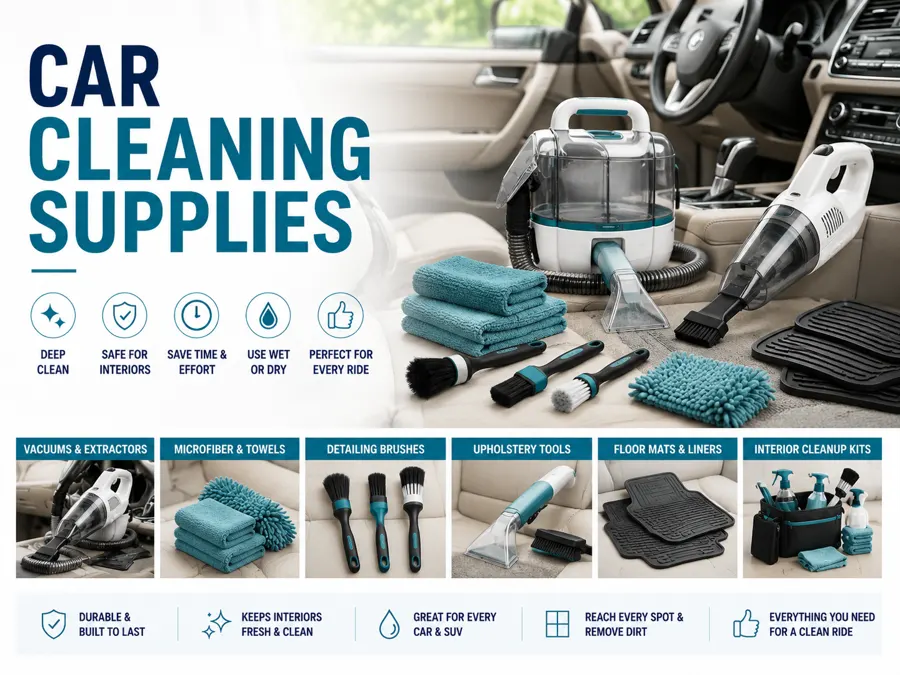
A useful car cleaning kit should cover the messes that actually happen inside your vehicle: loose grit, crumbs, pet hair, dust in seams, fingerprints on glass, and occasional fabric spots. The biggest kit is not automatically the best. A compact set of compatible tools is easier to store, easier to maintain, and less likely to leave you with duplicate brushes or liquids you should not use on your vehicle.
This checklist focuses on interior maintenance and detailing. Start with the Car Cleaning Supplies hub for the full catalog, then use the categories below to decide what belongs in your own kit.
Quick Answer
For most drivers, the essentials are a handheld vacuum with a crevice tool, several clean microfiber cloths, one soft detailing brush, a dedicated glass cloth or windshield tool, and a small caddy. Add a fabric-compatible spot cleaner or portable extractor only if your seats and mats need wet cleaning. Buy a complete kit when its included tools match those jobs; build your own when you need better control over materials, tool sizes, or storage.
The Car Cleaning Kit Checklist
1. A vacuum that reaches seams and floor edges
Dry pickup comes first because loose sand, crumbs, and grit can turn into abrasive sludge when cleaner is applied too early. A small handheld vacuum is convenient for seats, consoles, door pockets, and floor-mat edges. A crevice tool is more important than a long list of novelty attachments because narrow gaps collect debris that a wide nozzle cannot reach.
The BLACK+DECKER HLVA325JP07 handheld vacuum is one active catalog example. BLACK+DECKER lists a pull-out crevice tool, push-in brush, motorized pet head, washable bowl, and washable filter for this model. Compare it with more Handheld Vacuums, and confirm current accessories and care instructions before ordering.
2. Separate microfiber cloths for different jobs
Keep at least three cloth roles separate: one for glass, one for general hard surfaces, and one for dirtier door sills or spot work. Color coding is helpful because a cloth that touched greasy trim or a strong product should not move directly to the windshield. Replace or wash a cloth when it becomes loaded with grit; folding it into clean quarters gives you more usable faces without carrying a large stack.
The active Orighty microfiber cloth pack offers a multi-cloth format. You can also browse the broader Microfiber Cloth collection for different pack sizes and formats.
3. One soft detailing brush
A soft brush helps loosen dry dust around vents, buttons, stitching, cup-holder edges, and textured trim. Use minimal pressure, keep the brush clean, and vacuum loosened debris as you work. Do not assume every brush is suitable for every display, lens, glossy panel, leather finish, or delicate coating. The vehicle manual should decide what can be brushed and what should be wiped only.
The TTRCB seven-piece detailing brush set is a current catalog option for shoppers who want multiple brush sizes. For a simpler household-style comparison, see the Scrub Brush collection, but reserve stiff brushes for compatible, durable areas rather than screens or finished interior trim.
4. A dedicated glass cloth or windshield tool
Interior glass collects fingerprints, haze, and film. A low-lint cloth used only for glass is the basic tool. A long-handled windshield tool can help reach the lower corners of a steep windshield, but it does not replace careful product selection. Apply liquid to the cloth when overspray could land on a screen, dashboard, or trim, and follow the vehicle maker’s instructions for tinted glass and electronic displays.
Compare Window Cleaning Tools if reach is the main problem. Keep the final glass cloth dry enough to buff remaining streaks without flooding the surface.
5. A surface-compatible interior cleaner
There is no single liquid that should be assumed suitable for every dashboard, coated seat, carpet, touchscreen, clear plastic, or natural material. Read your owner’s manual first, then the product label. Patch-test where directed, use the least moisture that completes the task, and never mix cleaning products. A general-purpose interior liquid belongs in your kit only when its labeled surfaces match your vehicle.
For a broader explanation of surface selection, see how to choose cleaning sprays without treating one formula as universal. Kitchen and vehicle surfaces are not interchangeable; the useful principle is to match the label to the material.
6. Fabric spot care only when you need it
Cloth seats, carpet, and removable mats may need more than dry vacuuming, but wet cleaning is an optional layer—not a default step every time. Start by removing dry debris. For a spill or stain, follow the vehicle and product instructions, test a hidden area when directed, avoid oversaturation, extract or blot moisture, and allow the material to dry thoroughly.
The active Chemical Guys Fabric Clean catalog listing is one formula example; verify the current label and your surface before use. For machines, compare Portable Carpet Cleaners and read the BISSELL Little Green review.
7. Crevice tools and small accessories that solve real gaps
A narrow nozzle, small plastic crevice tool, or compact brush can help around seat tracks and console gaps. Skip sharp improvised tools that could scratch trim, damage upholstery, or reach wiring. Do not probe beneath powered seats while they are moving, and keep loose tools away from pedals and seat-adjustment mechanisms.
Choose accessories by the spaces in your own vehicle, not by the piece count printed on a kit. One well-shaped crevice attachment and one soft brush can be more useful than many nearly identical parts.
8. A caddy or pouch that stays out of the driving area
A compact organizer keeps clean cloths separate from used ones and makes the kit easier to remove when passenger or cargo space is needed. Store liquids upright and according to their labels. Do not leave unsecured tools where they can roll under pedals, become projectiles, or bake in direct heat. A trunk bin, closed tote, or garage shelf may be better than permanent cabin storage.
Browse Cleaning Caddies for portable organization. A washable bag for used cloths is also helpful so residue does not spread to the rest of the kit.
Complete Kit or Build Your Own?
Choose a complete kit when the contents match your vehicle
A bundled kit is convenient when you need several basic brushes, cloths, reach tools, and an organizer at once. The ThinkLearn car cleaning kit combines a handheld vacuum, detailing brushes, and a windshield tool in its current catalog title. Larger examples include the TTRCB 27-piece detailing kit and the TTRCB 26-piece kit.
Piece counts alone do not show quality, material compatibility, or whether the package is interior-focused. Check the live listing for the exact included tools, then remove anything you cannot identify or do not need.
Build your own when surfaces or storage are specific
An à la carte kit is usually better when your vehicle has delicate screens, unusual upholstery, very limited storage, frequent pet hair, or a recurring fabric-cleaning need. It lets you spend space on the tools you use and avoid duplicate brushes. Start with vacuum, cloths, brush, and glass care; add wet-cleaning or pet tools only after a real need appears.
Three Practical Kit Levels
Five-minute maintenance kit
- One handheld vacuum or compact dry-pickup tool
- Two or three color-coded microfiber cloths
- One soft detailing brush
- One glass cloth
- One small storage pouch
This lean set handles crumbs, dust, fingerprints, and quick weekly touchups. It is the right starting point for most drivers.
Family or pet kit
- Everything in the maintenance kit
- Vacuum attachment suited to upholstery or pet hair
- Extra cloths kept separate for spills
- Fabric-compatible spot-care supplies
- Small waste bags and a sealable used-cloth bag
Pet hair and food spills call for more frequent dry pickup and more cloth rotation, not necessarily stronger chemicals. See Best Handheld Vacuum for Cars for vacuum-format guidance.
Deeper interior-detailing kit
- Everything above that suits your vehicle
- Multiple brush sizes for compatible seams and textured areas
- A windshield-reach tool
- Portable extractor only for compatible fabric tasks
- Larger caddy with clean and used sections
This level makes sense for recurring deep cleaning, several vehicles, or fabric-heavy interiors. It should still remain task-based. The companion guide Best Car Cleaning Supplies for Interior Detailing compares the main product categories in more detail.
What You Usually Do Not Need
- Dozens of duplicate brushes: select sizes and bristle types for specific surfaces.
- One “universal” chemical: material and label compatibility matter more than broad marketing language.
- A wet machine for routine dust: vacuuming and dry tools should handle loose debris first.
- Permanent cabin storage for every product: heat, leakage, and unsecured objects can make this impractical.
- Unverified stain, odor, or sanitizing promises: results depend on the material, soil, process, and label directions.
A Safe, Efficient Cleaning Order
- Park safely, switch the vehicle off, and remove valuables, trash, mats, and loose objects.
- Read the owner’s manual for screens, upholstery, trim, glass, and restraint-system cautions.
- Work from higher surfaces downward, using a soft brush and vacuum together for dry dust.
- Vacuum seats, seams, carpet, mat wells, and accessible edges before adding moisture.
- Clean compatible hard surfaces with the product applied as directed, avoiding overspray.
- Clean interior glass with a dedicated cloth and inspect for streaks from the driver’s viewpoint.
- Spot-clean compatible fabric only where needed; avoid soaking foam, seams, sensors, or electronics.
- Allow damp materials to dry, wash used cloths separately as appropriate, and empty the vacuum.
- Return only securely stored essentials to the vehicle and keep the pedal area completely clear.
Frequently Asked Questions
What should every car cleaning kit include?
A handheld vacuum or suitable dry-pickup tool, clean microfiber cloths, a soft detailing brush, a glass cloth, and secure storage cover most routine interior jobs. Add liquids and wet-cleaning equipment only for compatible surfaces and actual needs.
Is a complete car detailing kit worth it?
It can be when you need most of the included tools and have space to store them. Compare the useful pieces, materials, and current contents rather than judging value by the advertised count.
Do I need a portable carpet cleaner?
Not for ordinary dust and crumbs. A portable extractor can be useful for compatible fabric seats, carpet, or mats with spills and spots, but it requires correct solution, moisture control, extraction, and drying.
Can I use household cleaner inside a car?
Do not assume so. Vehicle interiors combine coated plastics, displays, glass, fabrics, synthetic upholstery, leather or leather-like materials, adhesives, electronics, and safety components. Follow the owner’s manual and the cleaner label.
How many microfiber cloths should be in the kit?
Three roles are a practical minimum: glass, general surfaces, and dirtier work. Carry extras when you clean several vehicles, handle frequent spills, or need to stop transferring residue between tasks.
Should the kit stay in the car?
Only securely stored items that tolerate the labeled storage conditions should remain. Liquids, batteries, loose tools, and bulky equipment may be safer in a garage or utility area. Never allow an organizer or tool to interfere with pedals, seats, or restraints.
What is the best order for cleaning a car interior?
Remove loose items, dry-dust and vacuum from high areas downward, wipe compatible hard surfaces, clean glass, then handle fabric spots. This sequence limits the chance of turning loose grit into wet residue or re-soiling a finished area.
Final Verdict
The car cleaning kit you actually need is smaller than many preassembled bundles suggest. Begin with a vacuum, several purpose-separated microfiber cloths, a soft brush, glass care, and secure storage. Add fabric treatment, extraction, pet tools, or extra brushes only when your vehicle and routine justify them. A complete bundle is convenient when its contents match those jobs; a custom kit gives you better control when surfaces, storage, or recurring messes are specific.
Sources Checked
Product-specific vacuum details were checked against BLACK+DECKER’s HLVA325JP07 specifications. Fabric-cleaning workflow was checked against BISSELL’s carpet-cleaning instructions and BISSELL’s formula-compatibility guidance. Always follow the instructions for the exact vehicle, material, tool, and cleaner you use.