Electric Spin Scrubber vs Traditional Scrub Brush: Which Is Best?
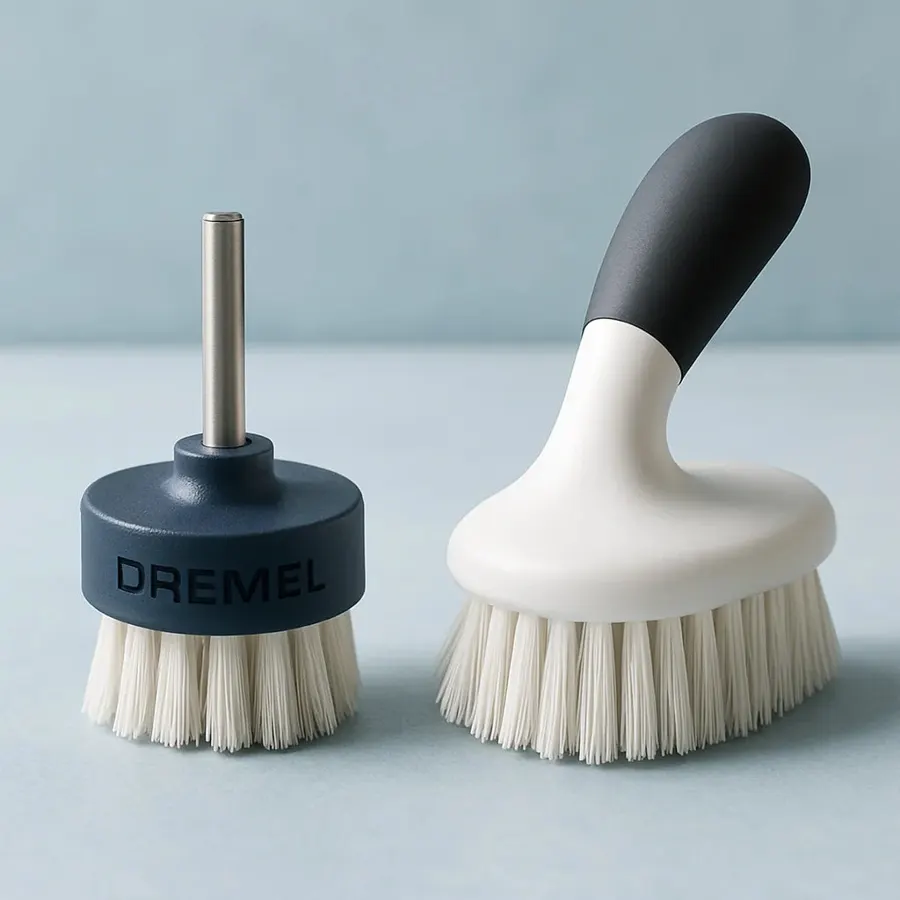
Electric spin scrubbers and traditional scrub brushes solve the same basic problem in very different ways. A powered tool supplies repeated brush motion, while a manual brush gives your hand direct control over pressure, angle, and speed. The better choice depends less on which format sounds stronger and more on the surface, the size of the job, the storage you have, and how much setup you will realistically tolerate.
This guide compares both formats for showers, grout, tile, tubs, floors, kitchens, and other stubborn household messes. Clean Home Picks is an independent product-discovery site; we do not sell, ship, warranty, or process returns for the products discussed.
Quick Answer
Choose an electric spin scrubber when repeated hand motion is the main obstacle, you clean broad or heavily textured areas, and you are comfortable matching attachments and maintaining a powered tool. Choose a traditional scrub brush when you want immediate setup, precise pressure, quiet operation, easy rinsing, and a compact tool for corners or short jobs. Many homes benefit from both: powered motion for larger sections and a narrow manual brush for grout lines, edges, and final detail work.
Electric Spin Scrubber vs Traditional Scrub Brush at a Glance
Electric spin scrubber
- Motor supplies repeated brush motion
- May reduce repetitive wrist and forearm movement
- Often accepts different heads for broad or detailed work
- Needs batteries or charging, attachment care, and dry storage
- Tool weight and vibration still matter
Traditional scrub brush
- Pressure and motion come directly from the user
- Simple to position around edges and fixtures
- No battery, charging cable, or motor to maintain
- Usually easier to rinse, dry, and store
- Long sessions demand more repeated hand and arm motion
Neither format guarantees a cleaner surface. Results also depend on dwell time, the cleaner used, brush stiffness, technique, and whether the residue is appropriate for scrubbing. Start with the surface maker's instructions and the least aggressive combination likely to work.
How the Two Brush Types Actually Differ
Powered motion versus direct pressure
An electric scrubber rotates or oscillates its attached head while you guide the tool. That motorized action can take over some of the repetitive movement involved in brushing a shower wall or textured floor. It does not remove the need to guide the head, keep it stable, or work in controlled sections. A heavy or awkward powered tool can still be tiring, especially overhead or at arm's length.
A manual brush translates every movement of your hand into the bristles. This makes it easy to lighten pressure near caulk, change direction along a grout line, or stop immediately around a delicate edge. The tradeoff is repetition: wide areas and persistent residue may require more strokes.
Attachments versus one-purpose simplicity
Many powered models use interchangeable heads. A broader pad can cover open tile, while a smaller bristle head can work around fixtures. The practical value depends on whether the kit includes heads suited to your surfaces and whether replacements are easy to identify. A large accessory bundle is not automatically better if most pieces do not match your cleaning jobs.
Manual brushes are easier to understand at a glance. A palm brush covers open surfaces, a narrow grout brush follows joints, and a long-handle brush increases reach. Browse the broader scrub brush collection to compare those shapes before choosing by brand alone.
Six Useful Product Formats to Compare
1. Dremel Versa Power Scrubber Kit: compact powered option
The Dremel Versa PC10-07 pairs a cordless powered tool with several cleaning pads. Its compact body makes it a logical comparison for counters, sinks, tubs, and smaller wall sections where a long pole would be cumbersome. The important buying question is not simply how many pads are included; confirm that the supplied pad material is approved for the surface you plan to clean.
Check the Dremel Versa Power Scrubber Kit on Amazon, or compare the site's complete Dremel scrub brush selection.
2. Rubbermaid Reveal Power Scrubber: detail-head powered option
The Rubbermaid Reveal listing includes multi-purpose and grout heads, making it a useful format for shoppers who care more about seams and edges than broad floor coverage. A small motorized head may reduce repeated back-and-forth movement, but it still needs gentle guidance. On grout, avoid treating motor power as permission to press harder; let the head move while you watch the surface.
Check the Rubbermaid Reveal Power Scrubber on Amazon, then see other Rubbermaid scrub brush options.
3. Rubbermaid Reveal 18-Piece Kit: accessory-focused setup
The 18-piece Reveal kit is the comparison point for shoppers who want several heads and supporting pieces in one package. It can make sense when you have clearly different tasks, such as open tile, narrow grout, and fixture edges. Before choosing a larger kit, decide where every head will dry and how you will prevent a brush used near a toilet or utility area from being reused in a kitchen.
Check the Rubbermaid Reveal 18-Piece Kit on Amazon.
4. OXO Good Grips All Purpose Scrub Brush: everyday manual control
An all-purpose handheld brush is a sensible baseline. It is ready immediately, can be angled by hand, and is easy to rinse after a sink, counter, tub edge, or small tile job. It will not spare you repetitive movement on a whole shower, but its simplicity can make it the tool you actually reach for during routine cleaning.
Check the OXO Good Grips All Purpose Scrub Brush on Amazon, or explore the OXO Good Grips scrub brush collection.
5. OXO Good Grips Heavy Duty Scrub Brush: firmer manual format
A heavy-duty manual brush is worth comparing for durable, manufacturer-approved surfaces and localized buildup. The label “heavy duty” describes the intended format, not universal surface safety. Firmer bristles can be inappropriate for some coatings, polished finishes, plastics, and stone, so test an inconspicuous spot and use modest pressure first.
Check the OXO Good Grips Heavy Duty Scrub Brush on Amazon.
6. Libman Heavy Duty Scrub Brush Kit: multiple manual shapes
This three-brush kit represents a different kind of versatility: separate manual brushes for tub, tile, and grout work. Dedicated shapes can be easier to manage than swapping powered heads, and each brush can be assigned to a room. The tradeoff is more handles to store and more manual motion during larger jobs.
Check the Libman Heavy Duty Scrub Brush Kit on Amazon, or compare the larger Libman scrub brush catalog.
Which Type Works Better for Common Cleaning Jobs?
Showers and tubs
A compact powered scrubber can be useful across repeated sections of tile or a tub surround. A manual brush gives better tactile feedback around caulk, drain hardware, fixtures, and curved edges. For a shower with broad walls and detailed corners, the most practical setup may be powered motion for open sections followed by a manual detail brush. Compare more task-specific choices in Bathroom Cleaning Tools and the best scrub brushes for showers, grout, tile, and tough messes guide.
Grout lines and tile floors
A small powered head can follow grout with less repeated hand motion, while a narrow manual brush gives exact control at intersections and boundaries. Broad round heads may ride on the tile instead of reaching recessed joints. For full-floor routines, read Best Mops for Tile Floors and Grout and compare floor cleaning tools; a scrubber handles targeted buildup, while a mop removes loosened residue across the larger surface.
Kitchen sinks, stovetops, and counters
Manual brushes usually make sense for quick, contained kitchen jobs because there is no setup and pressure changes instantly. Powered scrubbing may help on larger durable areas, but keep motor housings and battery compartments away from standing water unless the manual explicitly permits exposure. Use only a cleaner approved for the surface, and keep food-contact brushes separate from bathroom tools.
Large floors, walls, and outdoor areas
Repeated powered motion becomes more appealing as the area grows, but tool reach matters as much as the motor. A short handheld scrubber still requires kneeling or bending on floors. A long-handle manual brush may be more practical when posture and reach are the main concerns. Compare the entire task—not just the brush head—before buying.
Seven Factors That Should Decide the Purchase
1. Surface compatibility
Check the cleaner, pad, and surface instructions separately. Ceramic and porcelain tile can still have finishes, decorative details, grout sealers, or surrounding materials that need different care. Natural stone requires its own approved products and methods. Daltile's current tile-care guidance recommends testing cleaning products in an inconspicuous area and following manufacturer directions.
2. Hand motion, weight, and grip
A motor can reduce scrubbing strokes, but powered tools add weight and vibration. If comfort is a priority, compare the assembled weight, handle diameter, button placement, and whether the tool must be held continuously. A light manual brush with a comfortable grip may be easier for five minutes; a powered head may be preferable for a longer repeated task. No single format is automatically appropriate for every mobility need.
3. Control around fragile details
Manual brushes are generally easier to stop and redirect around caulk, trim, drains, and small fixtures. Powered heads require a stable grip and the correct attachment. Start at a low-pressure contact point and avoid forcing the head into edges.
4. Setup and maintenance
Manual brushes need rinsing, drying, and occasional replacement. Electric scrubbers add batteries or charging, head changes, and care for the main unit. If those steps discourage use, a simpler brush may deliver more practical value. If you clean several related areas in one session, the powered setup may feel worthwhile.
5. Storage and hygiene
Every wet head needs airflow before storage. Keep attachments off damp shower floors and separate tools by area when cross-contamination is a concern. A cleaning caddy or organizer can keep heads together without confusing kitchen and bathroom tools.
6. Cleaner compatibility
Mechanical scrubbing does not make an unsuitable chemical safe. Read the product label, ventilate as directed, and never mix cleaners. The CDC specifically warns against mixing household bleach with other cleaners or disinfectants because dangerous vapors can result. Browse cleaning sprays by intended surface, and wipe or rinse according to the label with a suitable microfiber cloth.
7. Ongoing parts
Powered tools may need replacement heads, pads, batteries, or a compatible charger. Manual brushes are replaced as a whole or as a separate head, depending on design. Check the exact model number before ordering accessories; visually similar parts are not necessarily interchangeable.
A Safer Scrubbing Routine for Either Tool
- Identify the surface. Confirm whether it is ceramic, porcelain, stone, fiberglass, acrylic, coated metal, or another material.
- Read both sets of directions. Check the cleaner label and the tool or attachment instructions.
- Ventilate and protect yourself as directed. Use gloves or eye protection when the cleaner label calls for them.
- Remove loose debris first. Grit trapped under a pad can scratch some finishes.
- Test a hidden spot. Use light pressure and inspect after rinsing and drying.
- Work in small sections. Keep cleaner within its labeled contact time and do not let residue dry unless directed.
- Rinse, dry, and inspect. Clean the brush head, allow it to dry fully, and store powered components according to the manual.
Frequently Asked Questions
Is an electric spin scrubber better than a regular scrub brush?
It can be better for repeated motion across larger or textured areas, while a regular brush can be better for control, quick setup, and detail work. Surface compatibility and brush-head choice matter more than the motor alone.
Can an electric scrubber damage tile or grout?
An unsuitable or overly aggressive head, excessive pressure, or an incompatible cleaner can affect some finishes, sealers, caulk, or surrounding materials. Follow the surface and tool instructions and test a hidden area first.
Does a powered scrubber remove the need for cleaning solution?
No. Some messes loosen with water and agitation, while others need an approved cleaner and labeled contact time. Use only products suitable for the surface and never mix cleaning chemicals.
Are electric spin scrubbers good for grout?
A small or narrow powered head can reduce repeated hand motion along grout lines. A manual grout brush may offer better control at corners, cracked areas, caulk lines, or delicate boundaries.
Can I use a spin scrubber on natural stone?
Only when the stone, cleaner, and specific attachment instructions all allow it. Natural stone can be sensitive to acids, abrasives, and some pads. Follow the stone supplier's guidance rather than assuming a tile-safe method is stone-safe.
How do I keep scrubber heads sanitary?
Rinse away residue, clean the head according to its directions, let it dry completely, and store it with airflow. Consider separate, clearly identified heads or brushes for kitchens, bathrooms, toilets, and utility areas.
Should I buy both powered and manual brushes?
That combination is useful when you regularly clean broad surfaces and tight details. A powered head can handle repeated motion on open sections, while a manual brush finishes corners, edges, and quick touch-ups. For a smaller home or occasional spot cleaning, one well-chosen manual brush may be enough.
Final Verdict
An electric spin scrubber is the stronger fit when you have recurring, multi-section cleaning jobs and want the motor to provide repeated brush motion. A traditional scrub brush is the more direct choice when precision, instant setup, quiet use, compact storage, and simple maintenance matter most. Neither is universally superior, and more power is not a substitute for the correct head, cleaner, or technique.
Start by matching the brush to your most common surface and the size of the job. If one tool must do everything, choose the format you will comfortably maintain and use. If your routine includes both broad shower or tile sections and detailed grout or fixture work, combining one powered scrubber with one narrow manual brush is often the most flexible approach. Continue with the scrub brush selection guide or browse all home cleaning tools to build the rest of the kit around your surfaces.
Availability and included accessories can change. Confirm the current listing, exact model, and manufacturer's care instructions before purchasing or using any brush.