Cleaning Supplies Checklist by Room
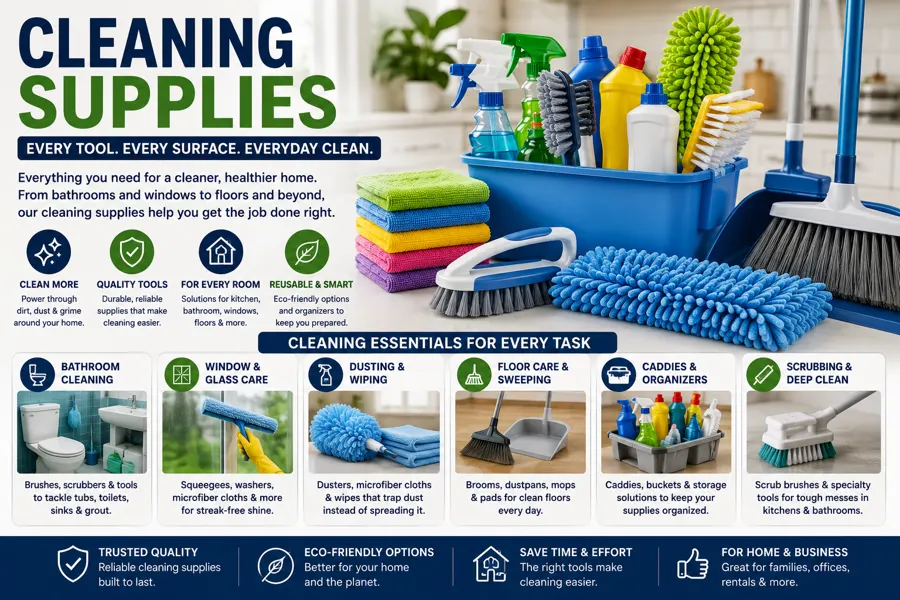
A useful cleaning-supplies checklist should tell you where each item belongs, what job it solves, and which tools should not travel from one room to another. A single overflowing cabinet makes it easy to buy duplicates, use the wrong formula on a surface, or carry bathroom residue into the kitchen.
This room-by-room guide builds compact kits for the kitchen, bathroom, floors, bedrooms and living areas, and car cleaning. It focuses on reusable basics first, then shows where a specialized brush, mop, duster, vacuum, or formula earns its storage space. Clean Home Picks is an independent product-discovery site; it does not sell, ship, warranty, authenticate, or process returns for the products discussed.
Quick Answer: Start with color-coded microfiber cloths, a general scrub brush, a broom and dustpan, a floor-compatible mop, a duster, a small vacuum, and a portable caddy. Keep kitchen and bathroom cloths separate, choose every liquid product for the exact surface, and store car-cleaning tools away from household kits. Add specialty supplies only when a recurring mess or material justifies them.
Room-by-Room Cleaning Supplies Checklist at a Glance
The broad Cleaning Supplies catalog has hundreds of options, but most homes need a much smaller working set. Use the checklist below as a starting point, then adjust it to the flooring, finishes, household members, pets, and storage available in your home.
- Kitchen: dedicated microfiber cloths, a non-scratch sponge or brush, dish-cleaning tools, a surface-compatible cleaner, trash bags, and a floor tool.
- Bathroom: separate cloths, a scrub brush, a detail brush, toilet tools, a squeegee when useful, gloves when labels direct them, and material-compatible formulas.
- Floors: dry-debris pickup, a mop suited to the floor, washable or replaceable pads, and only the solution approved for that material and tool.
- Bedrooms and living areas: a duster, microfiber cloths, a vacuum or other suitable floor tool, and a small detail tool for edges and upholstery.
- Car interior: separate towels and brushes, a portable vacuum, glass tools, and products labeled for the vehicle's exact interior materials.
- Shared storage: a caddy for dry tools and compatible daily-use items, plus secure storage for chemical products.
If you are equipping a new property, use Best Cleaning Supplies for a New Home first. That guide prioritizes what to buy before moving day; this one focuses on maintaining separate, efficient room kits after you settle in.
Kitchen Cleaning Supplies Checklist
The kitchen needs tools for crumbs, grease, food-contact areas, sinks, appliance exteriors, and floors. Do not assume one spray belongs on every counter or appliance. Natural stone, sealed wood, stainless finishes, specialty cooktops, and painted cabinets may all have different care instructions.
Everyday kitchen kit
- Two or more microfiber cloths reserved for kitchen use
- A non-scratch sponge or brush for sinks and washable work surfaces
- A small detail brush for seams, faucet bases, and tracks
- A broom and dustpan or compact vacuum for dry debris
- A cleaner explicitly labeled for the countertop or surface
- Dish soap and dish-cleaning tools stored separately from floor tools
- Trash bags and a washable bin-cleaning cloth or brush
The Amazon Basics Microfiber Cleaning Cloths, 24 Pack is one multi-color reusable format to compare. Color separation can make it easier to reserve one group for counters, another for appliances, and another for dirtier utility work. Browse more pack sizes in Microfiber Cloth.
Kitchen habits that reduce duplicate purchases
Start dry: collect crumbs and loose grit before spraying or wiping. Fold a cloth into sections so a clean face is available for each pass, and wash it according to its care label before residue accumulates. Apply cleaners exactly as directed, including any rinse requirement for food-contact surfaces. A product described as all-purpose still has limits; the label and surface manufacturer's instructions control.
Choose from Cleaning Sprays only after identifying the intended job. A separate stainless-steel, stone, or cooktop product is worthwhile only when the kitchen actually contains that material and its care directions call for specialized treatment.
Bathroom Cleaning Supplies Checklist
Bathrooms combine hard water, soap residue, narrow edges, wet surfaces, grout, fixtures, and toilet cleaning. A broad brush covers larger washable areas; a smaller detail brush reaches corners and tracks. Keep toilet tools and cloths physically separate from everything used on sinks, counters, or in the kitchen.
Core bathroom kit
- Color-coded bathroom-only cloths
- A handheld scrub brush matched to the surface
- A detail or grout brush for narrow lines and corners
- A dedicated toilet brush and holder
- A squeegee for glass doors or smooth wet walls when useful
- Gloves when the product label recommends protection
- Separate cleaners for only the materials that require them
The OXO Good Grips All Purpose Scrub Brush represents a simple manual format. Compare bristle, handle, and head options under Scrub Brush and Bathroom Cleaning Tools. For a deeper selection framework, read Best Scrub Brushes for Showers, Grout, Tile, and Tough Messes.
Use light pressure first. Stiff bristles, abrasive pads, acidic products, and bleach-based products are not automatically suitable for tile, grout sealer, natural stone, coatings, or metal finishes. Test an unfamiliar approach in an inconspicuous area and follow the product and material-care instructions. Rinse tools when directed, let them dry fully, and do not seal a wet brush inside a closed caddy.
Floor Cleaning Supplies Checklist
Floor care is easiest when dry and wet jobs are separated. Sand, crumbs, hair, and grit should normally be removed before damp cleaning so they are not pushed around or trapped under a pad. The right setup depends on whether the home has carpet, ceramic tile, stone, vinyl, laminate, sealed wood, or several of those surfaces.
Dry floor tools
- A broom, dust mop, or vacuum suited to the main floor
- A dustpan whose lip contacts the floor cleanly
- A crevice or edge tool for baseboards and furniture lines
- A washable or replaceable head that is easy to maintain
The O-Cedar One Sweep Broom and Step-On Dustpan Set is one integrated dry-pickup format. Compare separate and long-handle options in Broom, Dustpan, and the broader Floor Cleaning Tools hub.
Damp floor tools
- A mop approved for the floor material
- Enough clean pads or heads to avoid spreading dirty water
- A refill bottle, bucket, or reservoir that can be cleaned and dried
- A floor formula approved by both the surface and tool maker
The Rubbermaid Reveal Spray Mop Floor Cleaning Kit is one refillable spray-mop format with reusable pads to compare. Start with Mops and narrow by floor type and moisture control. Owners of wood floors should review Best Mops for Hardwood Floors; tile owners can use Best Mops for Tile Floors and Grout.
Do not use extra water as a substitute for a clean pad or the correct solution. Steam is not suitable for every sealed or wood floor. When care instructions conflict, follow the flooring manufacturer's guidance rather than a general cleaning shortcut.
Bedroom and Living-Area Cleaning Supplies Checklist
Bedrooms and shared living spaces usually need less chemical product and more controlled dust removal. Work from higher surfaces downward so dust from shelves, blinds, trim, and fan blades can be collected during the final floor pass.
- A washable cloth for reachable furniture and shelves
- A handled duster for blinds, vents, trim, and awkward shapes
- A vacuum or floor tool suited to carpet, rugs, or hard flooring
- An upholstery or crevice attachment when furniture and edges require it
- A small basket for returning out-of-place items before cleaning
The Swiffer Dusters Starter Kit with one handle and five dusters is a refill-based option. Compare it with washable heads and extended-reach formats in Duster.
For crumbs, stairs, furniture edges, and other small dry messes, the BLACK+DECKER Dustbuster AdvancedClean Handheld Vacuum is one compact format to compare. Check charging, filter, attachment, storage, and maintenance requirements at the destination. Larger spaces and carpeted rooms may be better served by the Vacuum Cleaners catalog.
Follow furniture, upholstery, electronics, and flooring care instructions. Apply liquid to electronics only when the device maker specifically allows it, and never spray directly into openings.
Car Cleaning Supplies Checklist
Keep vehicle tools separate from household kits. Car interiors combine glass, screens, textured plastics, coated trim, fabric, carpet, leather or synthetic upholstery, and narrow vents. A product suitable for one material may haze, stain, soften, or leave residue on another.
- Car-only microfiber towels in more than one color
- A portable vacuum with an appropriate crevice tool
- Soft detailing brushes for vents, seams, and controls
- A separate wheel or exterior brush that never touches the cabin
- A glass cloth or squeegee suitable for automotive glass
- Material-specific products used only according to their labels
- A ventilated tote that keeps dry tools organized between cleanings
The Detail Dudes three-piece car detailing brush set is one small brush format to compare for interior detail work. Visit Car Cleaning Supplies for towels, brushes, vacuums, glass tools, and other vehicle-focused options.
Vacuum dry debris before using liquid products. Check the vehicle manual and product label before treating screens, tinted glass, leather, synthetic upholstery, or coated trim. Use a separate towel for glass and avoid carrying wheel, tire, or exterior residue into the cabin.
How to Organize Shared Cleaning Supplies
Not every room needs a complete duplicate kit. Share low-risk dry tools where practical, while separating cloths and brushes used for kitchens, toilets, vehicles, and other distinct jobs. A simple color system is easier to maintain than a complicated label scheme: for example, one color for kitchens, one for bathrooms, one for general dusting, and one for cars.
The Rubbermaid Commercial Products Deluxe Carry Caddy is one rigid divided carrier to compare. The Cleaning Caddies and Organizers collection also includes compact, soft-sided, rolling, and wall-mounted formats.
- Keep chemical products in their original labeled containers.
- Store them securely away from children and pets.
- Do not place incompatible products together simply because they fit in one caddy.
- Let cloths, pads, gloves, and brushes dry completely before enclosed storage.
- Keep clean replacements separate from used tools awaiting washing.
- Review refills before buying another tool that performs the same job.
Cleaning Product and Surface Safety
The CDC's home cleaning guidance distinguishes cleaning, sanitizing, and disinfecting. Routine cleaning is often the appropriate first step, while sanitizing or disinfecting is a separate, label-directed task. Clean surfaces before sanitizing or disinfecting when directed, and use a product suitable for the exact material.
Read directions for dilution, contact time, ventilation, protective equipment, rinsing, disposal, and storage. Never mix cleaning products or chemicals. Keep products out of reach of children and pets. The EPA Safer Choice label can be one comparison factor for routine cleaners with screened ingredients, but it does not replace the usage label or the surface manufacturer's care instructions.
Frequently Asked Questions
What cleaning supplies should be kept in the kitchen?
Keep kitchen-only cloths, a non-scratch sponge or brush, dish-cleaning tools, a detail brush, trash bags, a dry floor tool, and only the cleaners approved for your counters, sink, appliances, and floor. Follow food-contact rinse directions on each label.
Should bathroom and kitchen cleaning cloths be separate?
Yes. Separate colors or labeled sets make it easier to prevent a bathroom or toilet cloth from returning to food-preparation areas. Wash and dry reusable cloths according to their care instructions.
Do I need a separate cleaner for every room?
No. Choose products by surface and job rather than room name. One compatible routine cleaner may cover several surfaces, while stone, specialty coatings, glass, or certain floors may require distinct care.
What should be cleaned first in a room?
Declutter first, then work from higher dry surfaces downward. Remove dust and loose debris before damp cleaning, and clean floors last so they collect residue displaced from shelves, furniture, counters, and trim.
Can the same vacuum be used indoors and in a car?
It can be practical when the vacuum and attachments suit both jobs. Empty the bin and clean filters or attachments as directed, and keep any tool that contacted especially dirty exterior areas away from household upholstery and floors.
How should reusable cleaning tools be stored?
Rinse or wash them as directed, allow them to dry completely, and store clean items away from used ones. Brushes and mop heads need airflow; chemical products require their original containers and secure, label-compliant storage.
How often should a cleaning checklist be reviewed?
Review it when the household changes, you add a new floor or surface, a tool wears out, or refills begin accumulating. Remove duplicates and add a specialty item only when a recurring task proves the need.
Final Verdict
The strongest cleaning-supplies checklist by room is deliberately compact. Give the kitchen and bathroom separate cloths and brushes, build floor care around the actual material, emphasize dust control in bedrooms and living areas, and keep car tools outside the household rotation. Share only the tools that can be cleaned and stored safely between jobs.
Start with the Cleaning Supplies hub, then narrow into the linked room and tool collections. Verify current product details, package contents, compatibility, and seller information on Amazon before deciding, and follow every product label and surface-care instruction.